Pittsburg empties out and fills back up in the same week every August. Leases turn over, one set of keys goes back and another one gets picked up, and somewhere in the middle of it somebody is standing in an empty apartment at ten at night with a roll of paper towels wondering how bad the oven really is.
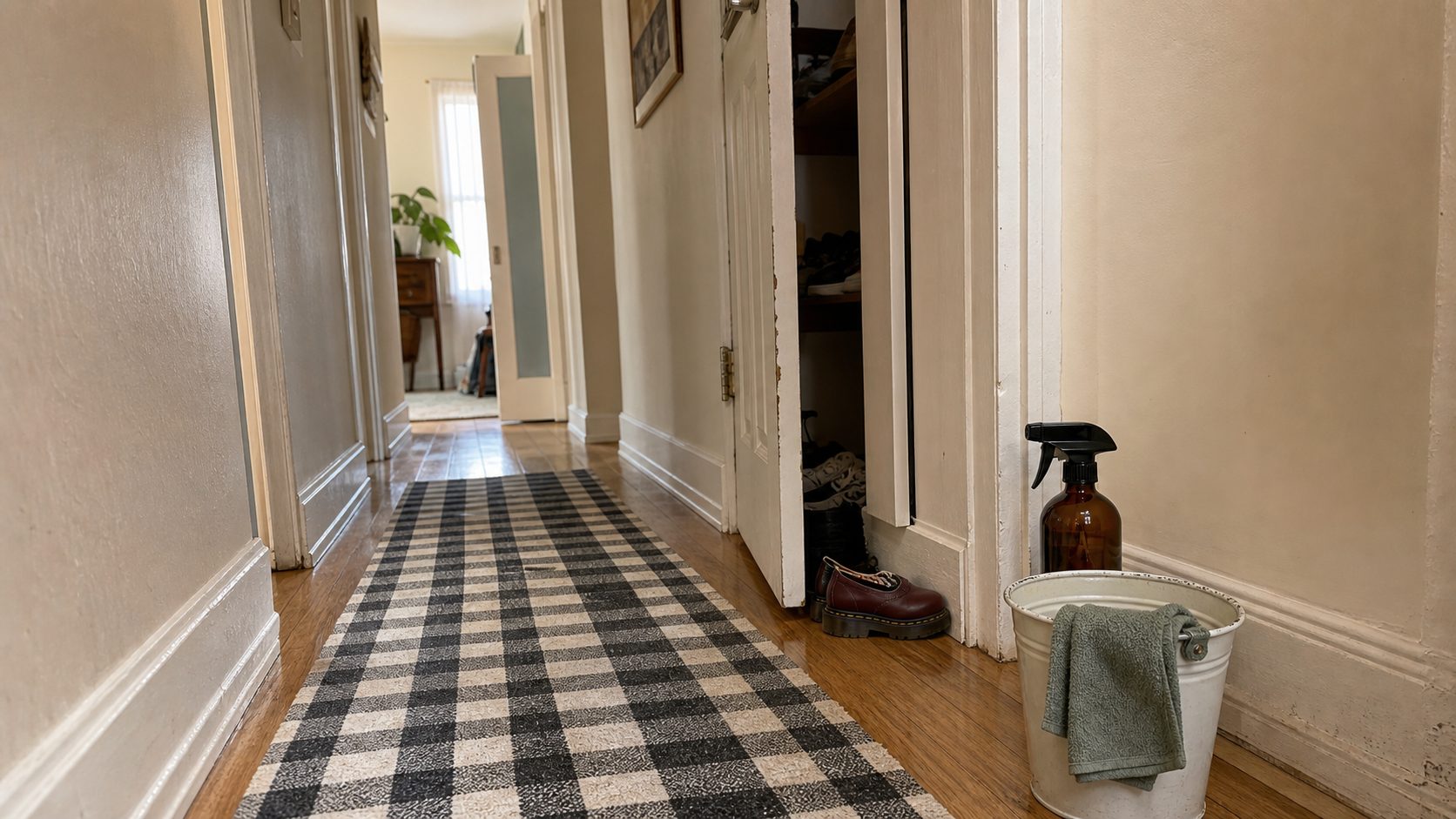
I get calls about this every year, usually two days before the walkthrough. So here's the whole thing written down: what your landlord is actually going to look at, what order to do it in, how long it honestly takes, and where people lose money they didn't have to lose.
The short version
A move-out clean is not a deep clean and it is not your usual Saturday tidy. It is a specific list, and the list is short. Landlords check the same handful of things in nearly every unit: the oven, the fridge, the bathroom, the floors, the walls, and whether the place smells. Get those six right and you have handled most of what a deposit deduction gets written for.
Clean after the movers, not before. Work top to bottom, back to front. Give yourself four to six hours for a one or two bedroom, a full day for a three bedroom house. And read your lease before you start, because the standard you are being held to is in there, not in this article.
What your landlord is actually looking at
Walkthroughs go faster than people expect. In my experience the person doing it is not hunting for dust on a shelf. They're checking a small number of expensive things and moving on.
- The oven and stovetop. This is the single most common deduction I hear about. Baked-on grease is visible from across the room and it takes real time to fix, so it gets charged.
- The fridge and freezer. Empty, wiped, defrosted, and left with the door propped if the power is going off.
- The bathroom. Toilet, tub or shower, and anything that has gone chalky or pink.
- Floors. Not just vacuumed. Corners, edges, under where the furniture was, and the spot in front of the sink.
- Walls and doors. Scuffs, handprints around light switches, and whatever the couch did to the paint.
- Smell. Nobody writes "it smelled" on an itemized statement, but it colors how the rest of the walkthrough goes.
What usually does not get charged is ordinary wear. Kansas law lets a landlord deduct for accrued rent and for damage from a tenant not holding up the lease, and the useful part for you is the timeline: they have 14 days after they work out the amount, and no more than 30 days after the tenancy ends, possession is returned and the tenant requests the deposit, to send the balance with an itemized written notice of what was taken out. If part of it is withheld wrongfully, the statute says a tenant can recover that amount plus one and a half times the amount withheld. You can read the whole thing at K.S.A. 58-2550. I'm a cleaner and not a lawyer, so treat that as a starting point and your lease as the real rulebook.
The practical takeaway: take photos of the empty unit before you hand back the keys, with the date on them. It costs you five minutes and it is the only record you'll have.
Do it in this order
Order matters more than technique here, because doing it out of order means cleaning the same surface twice.
- Wait until the place is empty. Anything you clean around gets moved later. The one exception is inside cabinets and the fridge, which you can wipe as you empty them.
- Start the slow jobs first. Spray the oven, put a bowl of vinegar in the microwave, and let the toilet sit with cleaner in it. All three of those work on their own while you do something else.
- Top to bottom. Light fixtures, fans, and the tops of cabinets before the counters. Counters before the floor. Whatever you knock loose falls to a place you have not cleaned yet.
- Wet rooms next. Kitchen and bathrooms take the longest and they're what gets inspected hardest.
- Walls, doors, and switch plates. A damp cloth handles most scuffs. Go gently on flat paint, which will lift if you scrub it.
- Floors last, working out the door. Vacuum, then mop, then leave.
The room-by-room list
Kitchen
Inside the oven, including the racks and the glass in the door. Stovetop, including under the burner grates and the drip pans. Inside and outside the fridge and freezer, plus the seals, which hold more than people think. Inside the microwave. Inside every cabinet and drawer, and the fronts too, which get a film of cooking grease that you only notice with a clean cloth in your hand. Sink and faucet, including the base where limescale collects. Then the counters and the backsplash.
The oven is the job worth starting early. Baking soda and a little water makes a paste that will handle most of it if you give it a few hours, and it does not put fumes in a closed apartment the way a heavy oven cleaner does.
Bathrooms
Toilet, all of it, including the base and the bolt caps. Tub or shower with the door tracks, the grout, and the shower head. Sink, faucet, and the vanity inside and out. The mirror. The exhaust fan cover, which is almost always grey and almost never cleaned. Then the floor, including behind the toilet.
Hard water is the local problem here. Plain white vinegar takes it down on tile, glass and chrome if you let it sit, and a bag of vinegar rubber-banded over a shower head overnight does more than scrubbing will.
Bedrooms, living areas and closets
Closet shelves and rods, and the floor of the closet, which collects everything. Window sills and tracks. Blinds. Ceiling fans. Baseboards all the way around, which is the detail that makes an empty room read as clean. Light switches and door handles. Vents.
The parts people forget
Behind and under the appliances if they pull out. The dryer vent and the lint trap. The inside of the washer, if it stays. The patio or balcony, swept. The garage floor. The mailbox. Any nail holes you agreed to fill, which is a lease question, not a cleaning one.
How long it really takes
People underestimate this one badly, and then run out of daylight.
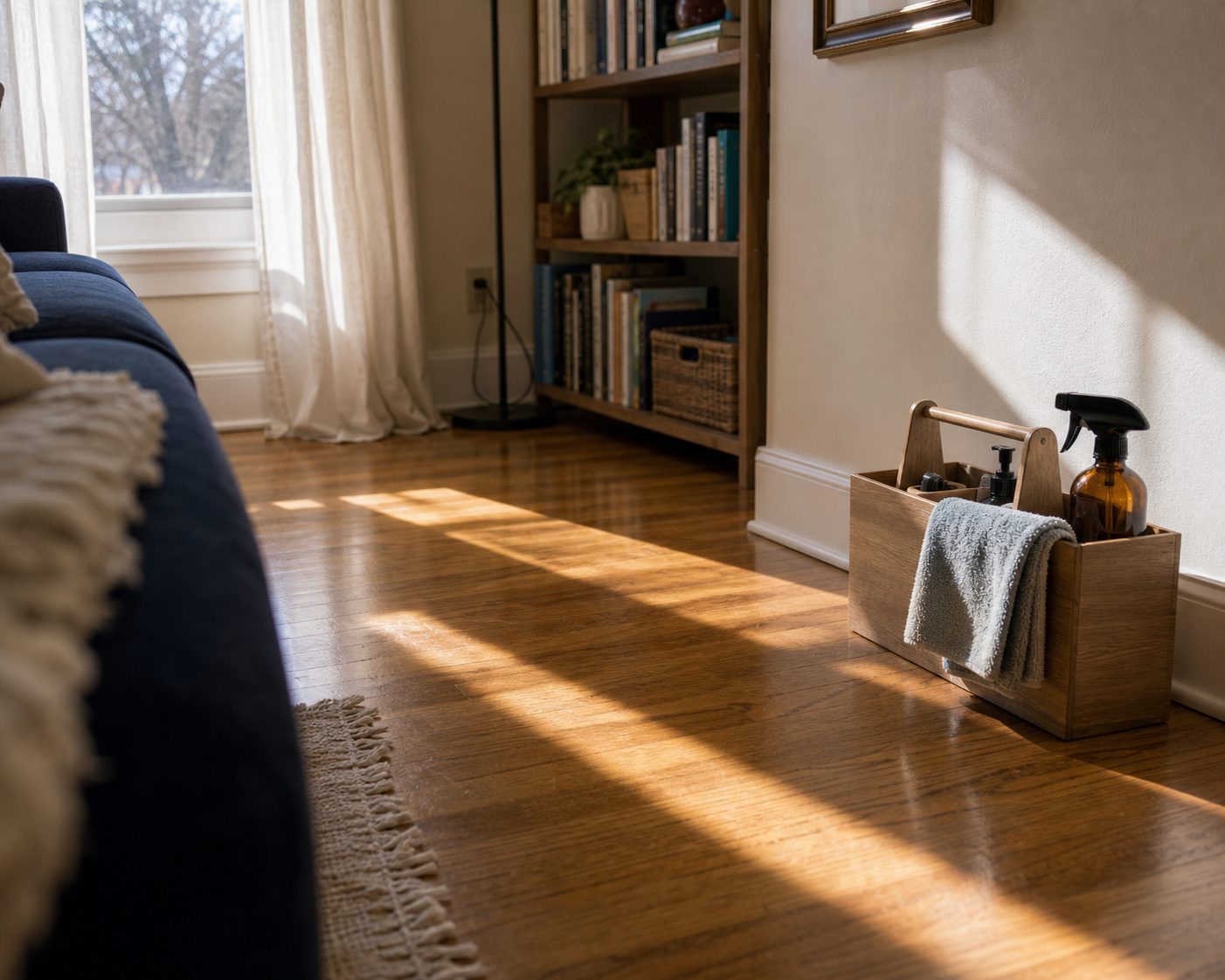
An empty one bedroom in decent shape is four hours of steady work. Two bedrooms, five to six. A three bedroom house is a full day, and that is with two people. The oven alone can eat an hour, though most of that is the cleaner sitting there working, so it is time you can spend elsewhere if you started it first.
What blows the estimate is almost always one of three things: an oven nobody has touched in two years, a bathroom with real hard water buildup, or carpet that needs more than a vacuum. If you have any of those, add half a day or make a call.
What a move-out clean will not fix
Worth being straight about, because this is where people expect a clean to save them and it can't.
Cleaning does not repair. Stained grout gets as clean as it will get and stays discolored. Carpet with a set-in pet stain needs extraction or replacement, not mopping. A cracked tile, a hole in the wall, a broken blind, a scratched floor: those are repairs, and they come out of the deposit whether or not the place is spotless around them. If something is genuinely damaged, it is usually cheaper to tell the landlord early than to have them find it.
Smoke is its own category. It gets into paint and carpet and no cleaning product removes it, which is why leases treat it separately.
Doing it without filling the place with fumes
Move-out is the job where people buy the harshest thing on the shelf, and it's also the job where you're alone in a closed, empty unit with the utilities half shut off, breathing whatever you just sprayed. That combination is worth thinking about for an hour.
You can do the whole list fragrance-free. Baking soda paste handles the oven and most scrubbing. A concentrated all-purpose cleaner like Dr. Bronner's Sal Suds covers general degreasing on cabinets and floors. Plain white vinegar takes down hard water where the surface can take it. ECOS free-and-clear works for anything you'd normally use a soap on. The trick with all of these is the same trick as with the scented ones: give it a few minutes to work instead of scrubbing immediately.
One safety rule that is not negotiable. Never mix bleach with ammonia or with vinegar. Both make gases you do not want in a small bathroom, and a lot of common cleaners contain ammonia without saying so on the front. One product per surface, rinse, and open a window.
We switched Green Gorilla over to products without synthetic fragrance after we realized some of the green-looking bottles we'd been using were greenwashed and still had harsh ingredients in them. It's better for our clients' families and pets, and honestly it's better for our own crew, who handle it all day. If you want the longer version of that argument it's in the non-toxic cleaning guide, and I've gone through what's actually in conventional cleaners separately.
Move-in cleaning, which almost nobody books
Here's the half of this that gets skipped. The unit you're moving into was cleaned to somebody else's standard, by somebody who was in a hurry, possibly the day before you got the keys.
An empty place is the only time you'll ever be able to clean it properly. No furniture, nothing in the cabinets, nothing to work around. Do the insides of cabinets and drawers before you put a single dish away. Wipe the fridge shelves. Run the dishwasher empty with vinegar. Do the baseboards and the window tracks. It takes a couple of hours and you will not get that access again until you move out.
If you have anyone in the house who reacts to scent, this matters more. A unit that was just turned over often smells strongly of whatever was used, and airing it out plus a fragrance-free wipe-down of the surfaces you touch most is worth doing before you unpack. It's the same reasoning behind our deep cleaning guide, just at a better moment to actually do it.
Planning a move around the Pittsburg school calendar
Mid-August moves can be tightly clustered in Pittsburg. Check the district calendar and Pitt State move-in schedule when planning your move, and book cleaning early if your dates fall near the start of a term.
If you're handing back keys that week, start the slow jobs the night before and book anything you're not doing yourself well ahead. If you're a landlord or you manage a few units around Pittsburg, Frontenac or Girard, the turnaround between one tenant leaving and the next arriving is the tight part, and it's the same problem short-term rental hosts have between guests. I've written about that side of it in the Airbnb turnover guide.
Common questions
Should I clean before or after the movers come?
After. Clean an empty place, not a full one. The only things worth doing early are the insides of cabinets and the fridge, as you empty them.
Do I need to clean the carpets?
Check your lease. Some leases here require professional carpet cleaning and a receipt, and some never mention it. Don't guess, because carpet is one of the bigger line items that can land on an itemized statement.
Is paying for a move-out clean worth it?
Depends on the deposit and on your week. If you're handing back keys the same days you start a new job or a new semester, the clean is often cheaper than losing the deposit and the weekend both. If the place is in decent shape and you have a free day, the list above is genuinely doable.
What if I already moved out of state?
That's a normal call for us. Somebody hands off a key, we do the walkthrough and the clean, and send photos when it's done.
If you'd rather hand it off
Move-out cleaning is part of our specialized work, alongside regular house cleaning in Pittsburg and across the Crawford County towns we serve, including Frontenac, Girard, Arma, Franklin and Cherokee. Every quote starts with a free in-person walkthrough, so we look at the actual unit and tell you straight what it needs and what a clean will and won't change. Call 620-408-3841 or send us an email and we'll find a time.