A standard clean handles the surfaces you use every day. A deep clean goes after everything underneath and behind them: inside the oven, the baseboards, the vent covers, the grout, the door tracks, the tops of the cabinets, the space behind the couch nobody has looked at since it was delivered.
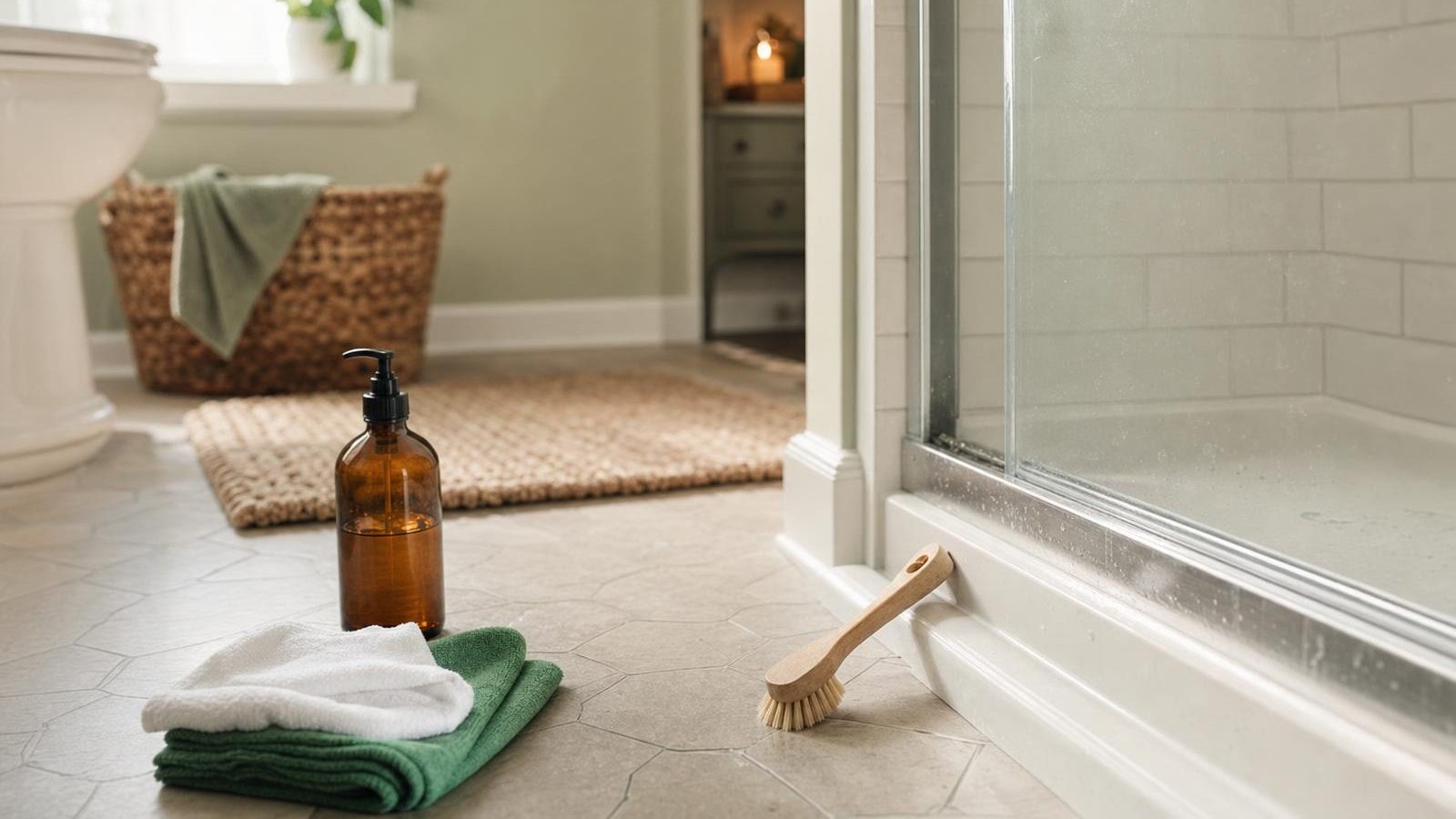
This comes up on nearly every walkthrough I do. Somebody asks for a deep clean, I ask what they are picturing, and we turn out to have two different jobs in mind. Which is fair, because the phrase has no agreed definition in this industry. Every company draws the line somewhere slightly different, and almost nobody publishes where.
So here is where we draw it, plainly, along with how long it takes, when a house genuinely needs one, and what it will not fix. Use it to compare quotes even if you never call us.
The short version
What a standard clean covers
A standard clean is the maintenance visit. Counters, tables and the surfaces you touch. Kitchen and bathrooms. Floors vacuumed and mopped. Trash out, beds made, mirrors and glass done. It keeps a house that is already in decent shape in decent shape, and for most homes on a recurring schedule that is the right job.
The work it leaves out is the work that does not need doing weekly. That is the whole reason the two jobs exist separately.
What a deep clean adds, room by room
Kitchen
- Inside the oven, and the range hood filter, which usually holds more grease than people expect.
- Inside the fridge, shelves and drawers pulled and washed.
- Cabinet fronts, and the tops of the cabinets if they do not run to the ceiling.
- Backsplash grout, and the seam where the counter meets the wall.
- Under and behind the stove and fridge where they can be moved safely.
- Small appliances wiped out, including the microwave and the toaster tray.
Bathrooms
- Grout scrubbed rather than surface-cleaned, in the shower and on the floor.
- The shower door track and the rubber seal along the bottom.
- Hard water and soap scum on glass, worked with time rather than force.
- Behind and around the base of the toilet, including the bolt caps.
- The exhaust fan cover, which collects dust and then blows it back down.
- Under the sink, where drips leave rings on the cabinet floor.
The rest of the house
- Baseboards, door frames, doors and switch plates.
- Ceiling fan blades and light fixtures.
- Window sills and window tracks.
- Vent covers and cold air returns.
- Behind and under the furniture that moves.
- Interior windows where they are reachable safely.
How long it takes, and why it costs more
A deep clean takes longer than a standard visit of the same house, sometimes by a good margin. The work is slower by nature. Grout has to sit with something on it. An oven cannot be rushed. Furniture has to be moved and put back. And a lot of it is done on your knees or on a step stool, one small area at a time.
That is the honest reason a deep clean is quoted differently. You are buying hours, and the hours go into places that took months or years to get dirty.
How many hours depends on the house: square footage, how many bathrooms, how long since the last one, whether there are pets, and how much has to be moved to reach anything. That is why we walk through a home before quoting it instead of pricing off a form. Every quote we give starts with a free in-person walkthrough, and a deep clean is the job where that matters most.
When you actually want one
- Before starting a recurring service. A first deep clean resets the baseline so the maintenance visits can hold it. Skipping it means paying for standard cleans that never quite catch up.
- Moving out or moving in. Move-out is about getting a deposit back, and the person inspecting is looking at exactly the list above. Move-in is about not inheriting somebody else's kitchen.
- Spring, or whenever your windows have been shut for months. Kansas gives us a long stretch of closed windows twice a year, and dust settles the whole time.
- After illness, a remodel, or a stretch where life got away from you. Construction dust in particular travels everywhere and settles into everything.
- Before or after hosting. Holidays, family in town, a graduation party.
- On a schedule for a rental. If you run a short-term rental, the turnover between guests is a different job entirely. I wrote about that in the Airbnb turnover cleaning guide.
What a deep clean will not do
This part matters as much as the list, because expectations are where people end up disappointed.
A deep clean is cleaning. It will not repair or restore. Grout that is stained through will come up cleaner and stay a shade darker than it started, because the color is in the material now. Hard water etching on glass is damage to the glass itself, so it does not wash off. Scratched floors stay scratched, and a worn finish stays worn. Carpet gets vacuumed thoroughly, and actual extraction is a separate service with a separate machine.
Clutter is its own thing too. We can clean around belongings or organize a space as an à la carte job, and either is fine, but deciding what stays and what goes is not a call anybody should make for you. Say which one you want ahead of time and the day goes smoothly.
Anybody who promises to make an old surface look new is selling you something. I would rather tell you at the walkthrough what will improve and what will stay as it is.
If you are doing it yourself, do it in this order
- Pick up first, so you are cleaning surfaces instead of shuffling piles.
- Start the soaking jobs early. Oven, shower, anything that needs to sit.
- Work top to bottom in each room. Fans, then shelves, then furniture, then floors.
- Do dry work before wet work, so dust does not turn to grime.
- Finish each room instead of doing one task through the whole house. Finished rooms keep you going.
- Floors last, one room at a time, backing out the door.
One safety rule, and it is not negotiable. Never mix bleach with ammonia or with vinegar. Both combinations make gases you do not want in your lungs, and plenty of common cleaners contain ammonia without saying so on the front. Use one product on a surface, rinse, and open a window while you work.
Deep cleaning without filling the house with smell
Deep cleaning is the job where people reach for the harshest thing under the sink, and I understand why. It is also the job where you are on your knees breathing whatever you just sprayed, in a closed bathroom, for an hour.
You can do this fragrance-free. Baking soda and a little water makes a paste that handles most grout and oven work with time and a brush. A concentrated all-purpose cleaner like Dr. Bronner's Sal Suds covers general degreasing, and plain white vinegar takes down hard water where the surface tolerates it. What all of these need is dwell time and a decent brush, which is the real trick with anything baked on.
We switched Green Gorilla's products over to ones without synthetic fragrance after realizing some of the green-looking bottles we had been using were greenwashed and still had harsh ingredients in them. It is better for our clients' families and pets, and it is better for the people on our crew handling it all day. If you want the longer argument, it is in the non-toxic cleaning guide, and I have written about what is actually in conventional cleaners.
A house after a real deep clean does not smell like lemons. It does not smell like much at all, which is what clean actually smells like.
Deep cleaning in Southeast Kansas
Our seasons make the case for a deep clean twice a year, and the timing is worth thinking about. Spring here brings pollen and everything that comes with it, and by then the house has been closed up all winter with the furnace pushing dust through the vents. Late summer, the windows have been shut again for the air conditioning, and anyone with allergies is feeling it.
Older housing stock is the other thing. A lot of homes around Pittsburg and the Crawford County towns have real age on them, which means painted woodwork, original trim, tile with grout that has been there a long while, and windows that collect dust in the tracks. Those homes reward a deep clean more than a new build does, and they need a gentler hand while it is happening.
If you want this one off your list, we do deep cleans as part of our specialized and à la carte work, alongside regular house cleaning in Pittsburg and across the Crawford County towns we serve. Tell us what is bothering you about the house and we will come look at it, no charge, and tell you straight what a deep clean will change.