A childcare room gets cleaned more often than almost any other room in a building, and it is the room where the wrong product does the most damage. Children sit on the floor. They put their hands in their mouths and then on a shared toy. They nap on a mat a few inches from where the mop went. Whatever is left on those surfaces ends up on them.
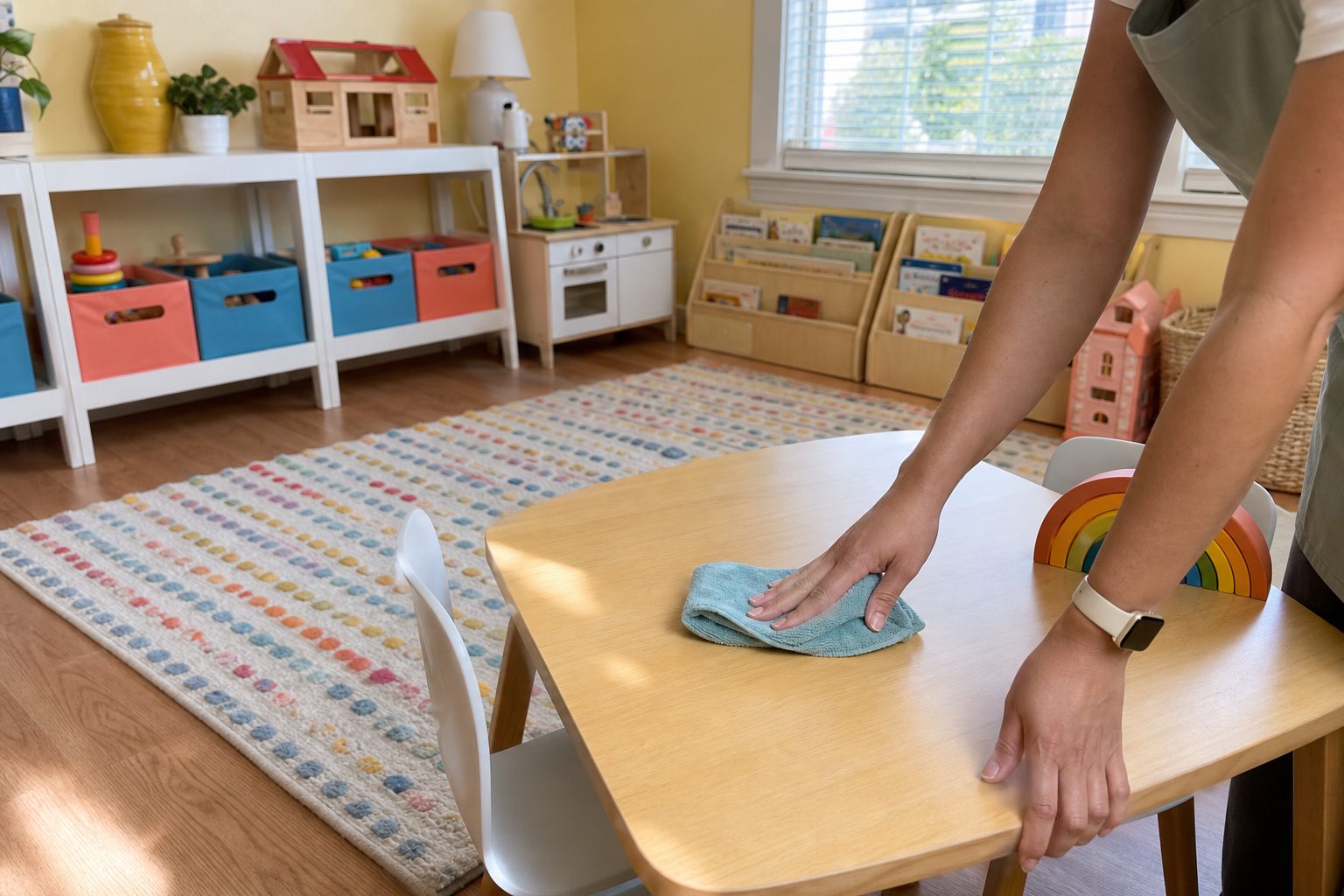
Here is the short answer, because it is the part people get backwards. A childcare room does not need a stronger product. It needs a more frequent one, used properly. Nearly everything that makes a daycare or a classroom feel genuinely clean comes from the schedule and the method, and almost nothing comes from how aggressive the bottle is.
We do office and commercial cleaning around Pittsburg and the Crawford County towns near us, and childcare rooms are where I get asked about ingredients the most. So this is how I think about the job, and the questions I would want answered if I were the one signing the contract.
What is different about a childcare room
An office and a daycare need different things from a cleaner, and it is not about square footage.
The people in the room are closer to the floor. Adults touch a floor with their shoes. A two-year-old spends most of the day on it, then eats off a table at that height. That changes what the floor has to be, and it is why the eating zone and the crawl zone get attention an office carpet never needs.
There is more soft stuff. Rugs, cushions, plush toys, nap mats, the fabric on the reading corner chairs. Soft surfaces hold soil, hold dust, and do not wipe clean. They need laundering or extraction on a schedule, and they are the surfaces most likely to be left out of a cleaning plan because they look fine.
And there is a volume problem. Twenty children touch the same bin of blocks in a morning. A single table gets wiped after snack, then used for playdough, then used for lunch. Frequency is what keeps up with that. Nothing else does.
Fragrance is the ingredient that causes the most trouble
When a daycare director tells me they want something gentler, the thing they usually mean without knowing it is fragrance.
Fragrance on a label is not one ingredient. It is an umbrella term a manufacturer can use to cover a long list of chemicals, and it does not have to be broken out on the label. That is most of why it turns up in products that market themselves as green. We found that out the hard way on our own cart, and it is the reason Green Gorilla moved its products to ones without synthetic fragrance. I wrote the longer version of that in our non-toxic cleaning guide and in what is actually in conventional cleaners.
In a childcare setting the stakes are different from a house. There is a child with asthma in almost every room, and scent triggers it. There is a teacher who has been getting headaches from the floor cleaner for a year and has not said anything. And there is the smell itself, which lingers in carpet and on soft toys and is still in the air when parents come through the door at pickup. Parents read that smell as chemicals, because it is.
Scent is also the oldest way to make a room that was not cleaned smell like it was. Nobody in a childcare building is fooled by it for longer than a day.
What a fragrance-free clean actually looks like
It is less dramatic than it sounds. A soap-based cleaner without added scent, water at the right temperature, microfiber, and enough mechanical action. That combination handles the ordinary soil in a childcare room without leaving anything behind.
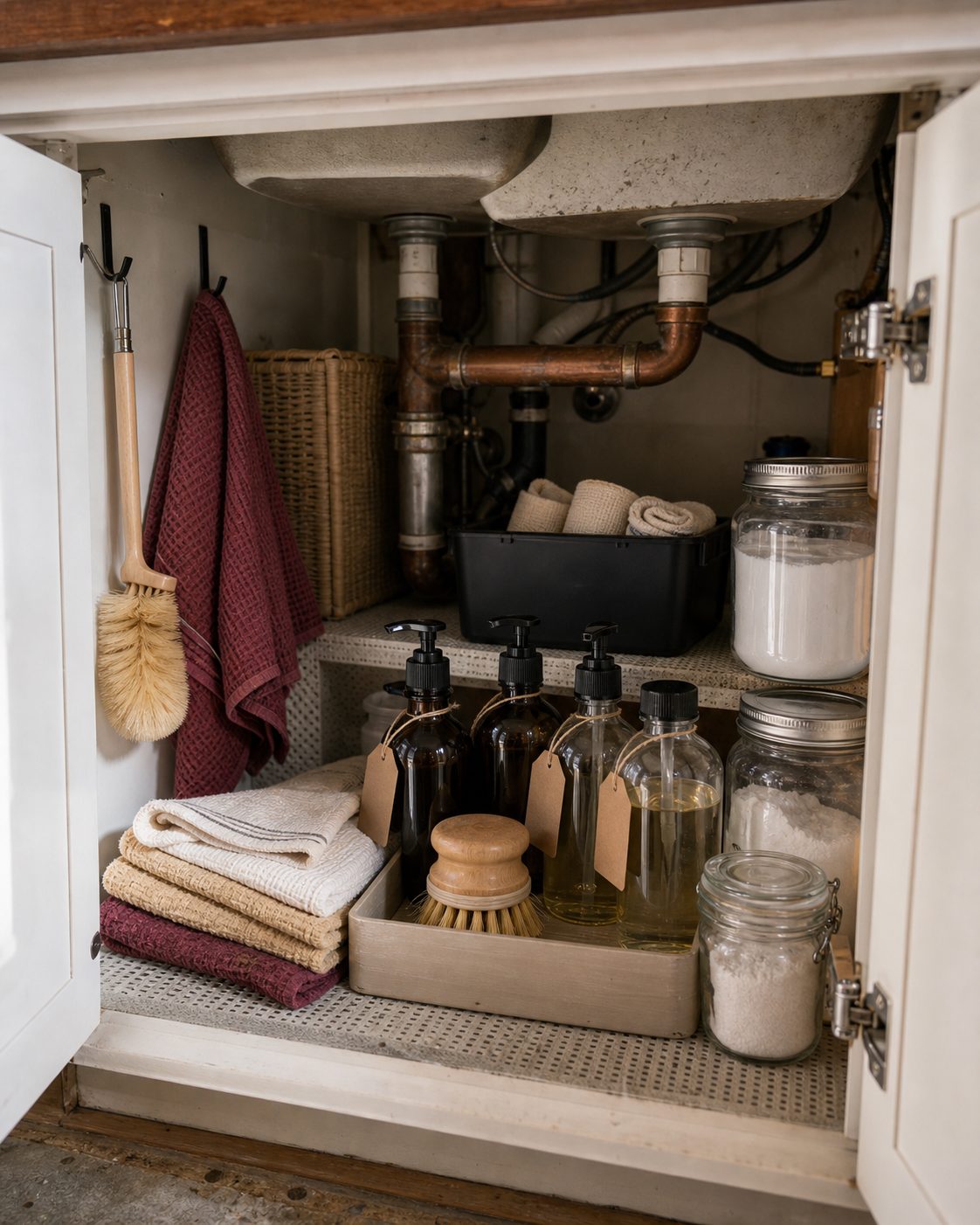
Disinfecting is a separate step from cleaning, and it only works on a surface that has already been cleaned. It also only makes sense on hard, non-porous, high-touch surfaces, at the times your own policy says it is required. Misting a whole room with a disinfectant does not do the thing people hope it does, and it puts a chemical in the air that the children are breathing for the rest of the afternoon.
Air fresheners, plug-ins and scented laundry products do not come into a childcare room at all when we are working in it. Nap linens get washed in unscented detergent, for the same reason they get washed in hot water.
The rhythm: daily, weekly, less often
This is the part that does the actual work. If you are cleaning in-house, it is the part worth writing on the wall.
Every day:
- Eating tables and high chairs, before and after every meal and snack.
- Bathroom fixtures and the changing surface, as often as your policy requires. In most rooms this is the busiest cleaning job of the day.
- High-touch hard surfaces: door handles, light switches, the faucet, the changing table rail, the trash lid, the fridge handle.
- Floors in the eating and crawling zones, swept or vacuumed, with a spot mop where food landed.
- Trash out, liners changed.
Every week:
- A full floor clean, including the edges and under the low shelving, which is where the crumbs live.
- The hard toys, washed in the sink and air dried.
- Cot sheets and nap linens laundered.
- Cubbies, coat hooks and the inside of the fridge if you serve food.
- Glass, mirrors, and the sink and bin lids that get wiped around all week.
Less often, and too often forgotten:
- Vents and return grilles, window tracks, baseboards, and the tops of the shelving.
- Rugs and upholstery, cleaned properly rather than vacuumed forever.
- Bathroom grout and the floor drain, which is a slow build nobody sees until it is a project.
- The inside of every storage bin, and the shelves behind them.
A room that keeps up with the top two lists never gets into the state where the third one feels overwhelming. That is the whole argument for frequency.
Toys, cots and the surfaces everybody argues about
Hard plastic toys go in the sink with unscented soap and warm water, then air dry. That is it. They do not need a bucket of disinfectant, and soaking them does shorten the life of anything with a sticker or a battery compartment.
Plush toys are the harder case, because they cannot be washed in place. We suggest rotating them rather than keeping forty out at once, so the ones in the room are the ones that just came out of the wash. Anything that has been in a mouth comes out of rotation the same day.
Sand and water tables get emptied and dried rather than wiped around, and any bin that travels between rooms gets cleaned before it travels, not after. A bin moving from the toddler room to the infant room is the fastest way to move whatever is going around.
Nap mats get wiped down at the end of the day and stood up to dry. Cot sheets get laundered weekly, and more often if a child has been sick. Standing them up to dry matters more than people expect, because a mat put away damp is where the smell comes from.
What changes in an older building
A lot of the childcare space around here is in buildings with real age on them, and that changes the products more than the schedule.
Painted woodwork, older tile, and grout that has been sealed and resealed all get damaged by anything caustic. The answer in an older building is a gentler product and more patience, not a stronger one. Original wood floors want very little water. Plaster walls do not want to be scrubbed hard, and they hold dust in ways drywall does not. Radiators and old vents collect a year of dust before anybody notices, and then they blow it around every time the heat comes on.
None of that is a reason not to clean the building. It is a reason to know what is in it before you pick the bottle, and to say so when you are getting a quote.
What to ask before you hire anyone
Ask these of any company you are considering, including us. The answers are short, and the ones who cannot answer them are telling you something.
- What products do you use, and can I see the labels or the safety data sheets?
- Is anything you bring in scented? That includes floor cleaner, air freshener and any laundry product used on nap linens.
- How do you handle the toys and the nap linens, and is that part of the normal visit or an extra?
- What is covered on a regular visit, and what only happens on a deep clean?
- What do you do differently when something is going around the building?
- Who is in the building while you clean, and how are they vetted?
- Are you insured, and can I see it?
If a company cannot tell you what is in the bottle, that is not a small gap. It means they have not had to answer the question before, and in a childcare room somebody eventually asks.
Doing it in-house, or handing it off
Both work. They fail in different places, so it is worth being honest about which failure you can live with.
Cleaning in-house is cheaper on paper and the staff already know the room. The failure is timing. A full day with children is exhausting, and the deep part of the cleaning list is what gets skipped on exactly the days it most needed doing, which are the days a bug is already moving through the building. Asking caregivers to clean well at the end of a shift is also asking them to do two jobs, and the one that is not in front of them loses.
Hiring it out costs more and buys consistency. Somebody arrives whose only job is the room, on a schedule that does not depend on how the day went. The failure there is a bad fit: a crew that treats a childcare room like an office, uses something scented, and does not know which surfaces get touched a hundred times a day.
There is a limit worth naming. If you have a single small room, hiring a weekly crew is hard to justify, and you are better off with a written in-house checklist and a deeper visit once a month or once a quarter. That is a real answer, not a sales pitch, and it is the one we give when it is the right one. If you do keep it in-house, keep the products unscented and keep the checklist on the wall where people actually see it.
Questions we get asked
Is fragrance-free the same as unscented?
No. Fragrance-free means nothing was added to create a scent. Unscented can mean the scent was masked with something else, which is why the words are worth reading separately.
Do I need to disinfect everything, every day?
No. Cleaning removes the soil, and it is what handles most of the room. Disinfecting is a separate step, it only works on a surface that is already clean, and on soft surfaces it does not work at all.
How often should the toys be washed?
Weekly for whatever is out in the room, and immediately for anything that has been in a mouth. Washing them more often than that is fine and washing them less is where the bin of blocks becomes the thing everyone in the building shares.
Can a room be cleaned while children are in the building?
Usually yes, if the products are unscented and surfaces are dry before the children are back on them. The eating tables and the changing area are the exception, and those get done when the room is empty.
What is the difference between a regular visit and a deep clean?
A regular visit keeps the room where it should be: surfaces, floors, bathrooms, toys, linens. A deep clean is the slower work behind that, the vents, grout, rugs, baseboards and the tops of things, on its own schedule. I broke that split down further in what a deep clean actually includes.
Do you clean daycares outside Pittsburg?
We work across Pittsburg and the Crawford County towns we serve. If you are just outside that, ask us and we will tell you honestly.
Every commercial quote starts with a free walkthrough, so we can see the room, the schedule it runs on, and what is already in the supply closet. If you run a daycare, a preschool, a church nursery or a classroom around here and you want the cleaning handled, get in touch and we will come look at it. You can also see everything we offer for homes and businesses.