You can't tell whether a cleaning company is really green by looking at it. The website was written by the company. A leaf on a bottle costs nothing to print. What you can do is ask a few questions that a company faking it won't have good answers to, and check one thing yourself at the walkthrough.
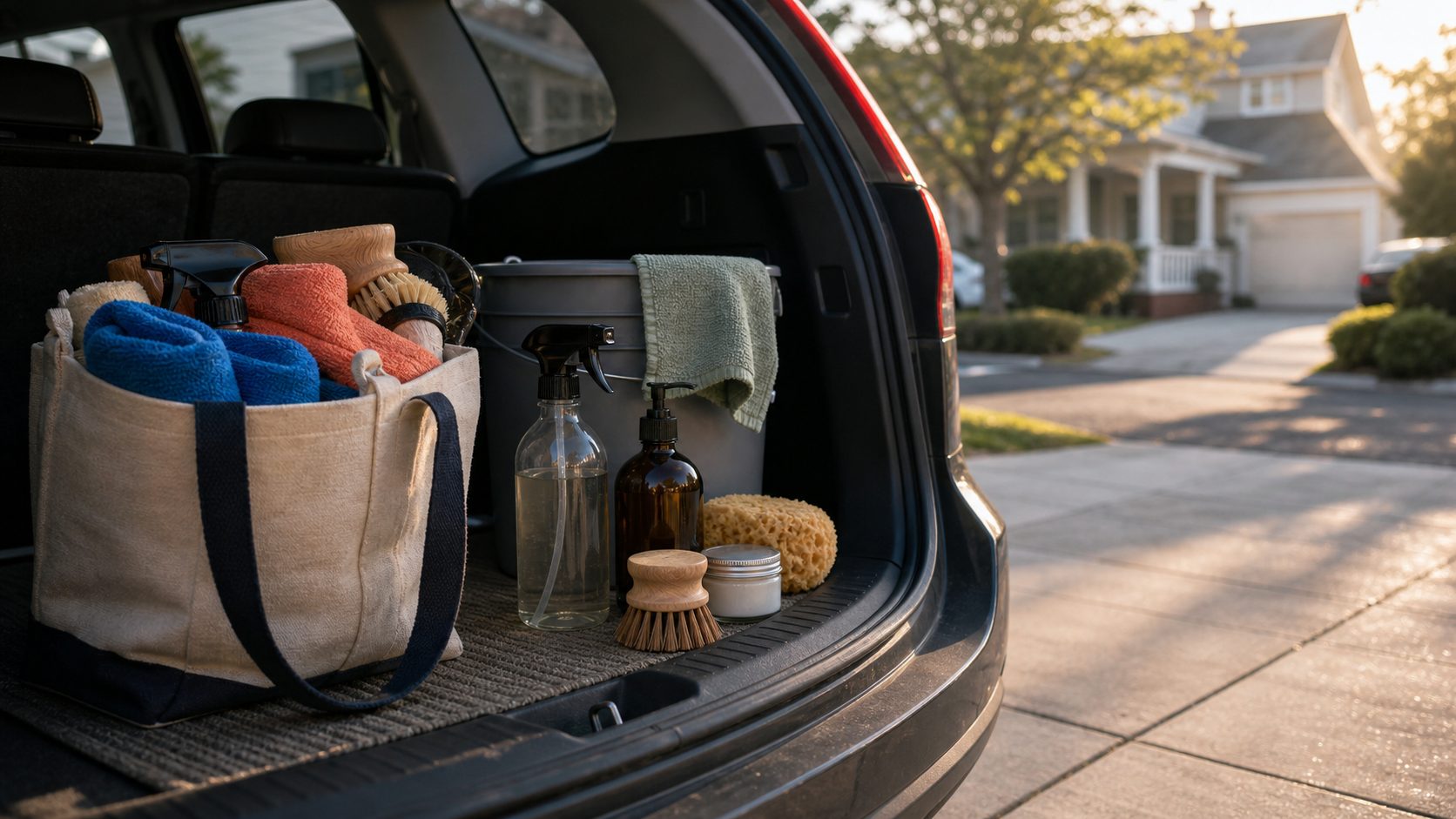
I run Green Gorilla here in Pittsburg, so I sit on both sides of this. I answer these questions from people who call us, and I ask a version of them every time I buy something for my own house. Some of it takes two minutes to check. Some of it you honestly can't verify at all, and I'd rather say that up front than pretend otherwise.
Why the word green doesn't tell you much
Greenwashing is when a product or a company looks greener than it is. You have seen the packaging. Muted earth tones, kraft paper, a leaf, maybe a little woodgrain. Words like natural, clean, eco-friendly or plant-based with nothing behind them. I have seen a bottle with a paper outer sleeve that was plastic underneath.
None of that is against the law, which is the problem. Those words are marketing. Nobody signs off on them. So I judge by the ingredient list on the back, not the front. That is the rule I use for our own supplies and the rule I would use if I were hiring someone.
Even the back of the label has limits
Here is the part that surprised me, and I want to be careful not to overstate it. Reading labels is still the best tool you have. It just isn't a guarantee.
A peer-reviewed study published in 2026 tested 113 personal care and cleaning products and compared what was in them to what was on the label. Almost all of them, 98 percent, held at least one chemical that wasn't listed. Eighty-five percent held at least one unlabeled chemical with known or suspected health hazards. On average the products contained more than three times the number of chemicals their labels listed, and some bottles labeled fragrance-free or natural had undisclosed chemicals in them (Schultz et al., Environment & Health, 2026).
That is one study, so I wouldn't treat it as the last word. What it tells me is that a cleaning product isn't perfectly transparent no matter how carefully it is labeled. Which is why the questions below do as much work as the label does.
Three questions I'd ask before booking anyone
These take about five minutes on the phone, and they do the most work of anything on this page.
1. What products do you actually use, and can you name them?
A real answer sounds like a list of names. "We use eco-friendly products" is not a list. Neither is "we use green products from a supplier." Someone who cleans houses for a living knows what is in their caddy.
2. Do you have a fragrance-free option?
Not "natural scent" and not "light scent." Fragrance-free. That is the one that matters most in this house, and the next section explains why.
3. What does the place smell like when you're done?
This one is sneaky and it is my favorite. A company genuinely using unscented products will tell you it smells like nothing. A company using scented products and calling them green will describe a scent. My favorite answer to hear is some version of "not much of anything."
Why fragrance is the thing I ask about first
"Fresh scent" was the first thing I gave up, and it made the biggest difference. Added fragrance isn't one ingredient. It is a blend of dozens of chemicals, and a company doesn't have to spell out what is in that blend on the label.
One peer-reviewed study tested 37 common fragranced products, cleaners and air fresheners among them. It found 156 different volatile organic compounds coming off them, and 42 of those are classified as toxic or hazardous under federal law. The part that stuck with me: the products labeled green and organic gave off about the same hazardous compounds as the regular ones, as long as they were scented (Steinemann, Air Quality, Atmosphere & Health, 2016).
So a green-looking bottle with added fragrance is not the win it looks like. If you want to go further into this, I wrote a whole guide to cleaning a home without synthetic fragrance, and a separate post on what's actually in conventional cleaners.
One more thing worth knowing before you talk to anybody. Fragrance-free and unscented get used as if they mean the same thing, and on a bottle they don't always. When a company uses one of those words, ask them which one they mean. The good ones will know.
What our own kit actually looks like
I will hold us to the same standard I just described.
We switched our cleaning solutions a while back, after I realized some of the products we were using were greenwashed and still had harsh ingredients and synthetic fragrance in them. Now we use as many fragrance-free products as we can. That is better for our clients' families and pets, and it is better for the people on my team who have their hands in those products all day.
The honest part. Not everything we use is fragrance-free, and I am not going to pretend it is.
- ECOS Free & Clear. Genuinely fragrance-free and dye-free.
- White vinegar and baking soda. Cheap, unscented, and they handle most of what a house throws at you.
- Dr. Bronner's Sal Suds. Biodegradable and concentrated. It is scented with fir and spruce essential oils rather than a synthetic fragrance blend, so it is not fragrance-free. If you would rather we skip it, we skip it.
- Mrs. Meyer's Baking Soda Cream Cleaner. Scented, lemon verbena, and I still reach for it on cooked-on stovetop messes. Plain baking soda does nearly the same job when someone needs zero scent.
We buy concentrates where we can, because less water shipped means less plastic.
The thing clients notice is the absence. A home comes out looking and smelling clean without that heavy leftover smell of cleaning products hanging in it. People ask us about it, which is how this post got written.
Red flags worth walking away from
- A price over the phone with no walkthrough. We don't do it, and I would be suspicious of anyone who does. Nobody can price a house they have never seen.
- Nobody can name a product. If the person booking the job doesn't know, ask who does.
- "We only use green products" as the entire answer. Real answers have specifics in them.
- Unwillingness to skip something. If someone in your house has asthma or a scent sensitivity, you should be able to say "not that one" and be heard.
What you can't check from your couch
At some point you have to look at the bottles. Ask to see them at the walkthrough. A company that is proud of what it uses will show you, and that is your chance to read the back of a label yourself.
Common questions
Is "eco-friendly" on a cleaning product a regulated claim?
It isn't checked the way people assume it is. Anyone can put the word on a bottle or on a van. The ingredient list on the back is where the real information is, and even that has gaps.
What's the difference between fragrance-free and unscented?
On a bottle, not always the same thing. Both words get used loosely. The one you want, for a household with sensitivities, is the one where the company can tell you what is in the product and confirm that nothing was added for scent.
Can I ask a cleaning company to skip a product?
Yes, and you should feel free to. Say it at the walkthrough rather than the morning of the clean. If you know what sets off a reaction in your house, name it. A cleaning company can work around one product.
Does a fragrance-free cleaner actually clean as well?
In our experience, yes. Vinegar, baking soda, soap and a good microfiber cloth do the actual work. What a scent adds is the feeling that someone was here. Once you get used to a home that smells like nothing, that heavy leftover smell is the thing that starts to feel off.
How do I compare two cleaning companies fairly?
Ask both the same three questions and listen to how specific the answers are. Naming products, knowing which of their products are fragrance-free, and being able to say what the house smells like afterward. That tells you more than a page of testimonials.
Someone in our house has asthma. What should we ask for?
Ask for fragrance-free products, ask for the product list before the visit, and ask them to crack the windows while they work if the weather allows. Tell them about the asthma before the walkthrough rather than on the day of the clean. That is a conversation worth having in person.
If you'd rather hand it off
This is how we clean, for homes and businesses. If you want the fragrance-free version without doing the work, we do house cleaning in Pittsburg and across Crawford County, and office and commercial cleaning for clinics, daycares, churches and small offices that would rather not have a scent left behind. You can see the towns we cover on our areas we serve page, or look at everything we offer.
Every job starts with a free walkthrough, which is the point where you get to look at the bottles and ask me any of the questions above. Call 620-408-3841 or email service@ggcleaningco.com and we will set one up.